Hello everyone, Yazdi here. At Thanksgiving every year I update a list of one hundred things in life that I am grateful for. The list evolves. I have something to include in my 2012 update: film festival press accreditation. The ability to watch any movie playing at a film festival is something to be grateful for in life and makes all of the work that we put into producing Moviewallas worthwhile. Very grateful.
 So there we were over two weekends trying to watch as many films as humanly possible. The struggle to pick from every manner of cinematic presentation – foreign films, documentaries, short film programs, Hollywood premieres, Question and Answer sessions with actors / directors / cinematographers, cult films, old classics…. is the cinephile’s wet dream. And we sampled to our heart’s content. As the days wore on, and as I made my way through yet another screening, feeling the best kind of exhaustion there is [that comes from having watched too many(!) films], a theme began to emerge. Across the films I had sampled during the festival the common theme was of exceptional, honest performances from child actors. One film after another amazed me with startling, unaffected performances borne of a naturalism that is all too often missing from the portrayal of children in cinema.
The adage goes that filmmakers would do well as long as they steer clear of child actors and animals. And yet, the makers of so many films I saw bravely embraced the uncertainty – and what is likely a high level of difficulty with working with children – and brought something of meaning to the screen.
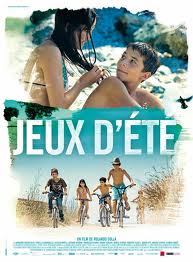 The first movie I saw, Summer Games (Jeux D’ete, directed by Giorgio Gobi, the official Swiss submission to the Foreign Language Film Category at this year’s Academy Awards), is one thing on the surface and many things underneath. At a run-down coastal town in Italy frequented by less than affluent tourists, many arrive during summer to camp out for a few days around the beach. Which causes for unexpected interactions amongst strangers. Tenuous at first, an unlikely clique develops between five pre-teen and teen kids from very different economic, social and ethnic backgrounds. The initially innocent games the kids devise – in which the loser has to submit to what the victor demands – start to, over a period of time, wander into increasingly dangerous territory. The connections between the five unravel and reform constantly, influenced as much by the behavior of their adult guardians as their own shifting loyalties. The movie is as much about the adults, but one of the joys of this film is to see how effortlessly it captures the ebbing shifts in power and affinities between the kids in this group. Yes, we know that kids of a certain age can be remarkably cruel. And fearless in walking headlong into danger, because what child of a particular age cares about mortality. The near impossible feat this film accomplishes is in depicting one of the more dangerous and slippery things in cinema: teenage sexuality. The movie breathes and aches with a sensuality that is never prurient and as natural as the water in which the five kids spend so much of their time. Grappling with feelings they do not know how to process, and raging with contradictory, self-destructive behavior, the kids do what kids do. And the movie only holds a mirror to them, without judgment. The film is of course immensely helped by the natural performances from the lead child actors who wondrously bring all the complexities of being not-quite-an-adult to life. This is a film to seek out.
 Thursday Till Sunday (De Jueves A Domingo, by first time director Domingo Sotomayor Castillo) is a Chilean film that covers a four-day road trip taken by a couple, their daughter, and young son. The movie is seen, for the most part, through the eyes of the teenaged daughter. Approaching neorealism, this is a work of stark austerity, which may tempt a viewer to assign it hastily to the genre of films where nothing happens. The studiedly documentary feel, the naked abandon of traditional plotting and story arc, and the patient, unrushed, lingering of the camera over these four characters, may at first seem unsettling. But when one stops trying to deduce the film on a minute by minute basis, one settles into its rhythms. And you realize this is a film that trusts the intelligence of the viewer enough to not provide easy answers. And demands that the viewers bring their own experiences to glean what they will from this story. Slowly the cracks in the relationships come into focus, sometimes ever so briefly. More than anything else the movie evokes a sense of nostalgia – about a time, when being a child meant not having the tools to decipher what the behavior of the adults signified. The young daughter is never precocious, or all knowing, and the actor who plays her (Santi Ahumada) brings an effortless naturalism that belies any knowledge of a camera being around her, and captures all the complexities of being a teenager: distracted, self-involved, impatient but always well-meaning. In the Q and A after the film, the director revealed that the four-year old who played the younger brother was obviously not up to acting in the traditional sense, and the other actors learned to ad-lib and work around his natural behavior on camera. No wonder the film evokes a feeling of purity about it.
Not all films with children had the same effect. Crazy and Thief, a film of less than an hour, made by Cory McAbee, stars the director’s seven year-old daughter and two-year old (!) son, as the titular characters who have adventures as they wander through the streets of a city. Their experiences straddle the line between reality and fantasy, the obvious and the mythological. This movie elicited the strongest reaction I had of any film I watched at the festival. And it was not the good kind. Precious to an extreme (much of the two year-old’s warbling is indecipherable and sub-titles tell us what he is saying), and constantly trying to be more than it is, the film for me, was ultimately undone by some unforgivable choices. I have a problem with films that depict children in peril with the specific intent of eliciting a quick emotional rise from the audience. And this film has many scenes of the two unaccompanied minors being put into all manner of danger. Yes, I realize that much of the film is meant to be surreal, but when the two kids get into the car of a perfect stranger, and then into his home, the ugly possibility of pedophilia hanging over the premise was too disturbing for me to shake off. I question the ethics of making a film such as this.
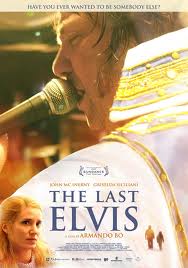 Armando Bo, the first-time director of the The Last Elvis (El Ultimo Elvis) has no trouble coaxing an altogether believable performance out of Margarita Lopez, who plays in this film, the young daughter of an Elvis Presley impersonator in Argentina. But it is John McInerny, playing Carlos, the lead, who impresses most by managing to transcend the kitschiness associated with celebrity impersonators. He plays a blue collar worker struggling to make ends meet while dealing with an ex-wife who does not think much of him, and a daughter who is uncommunicative. On the side, he plays Elvis tunes at local gigs, and the film makes it clear from the very first scene that this is not a man lacking in talent. His single-minded admiration for Elvis is so complete as to be entirely immune to irony. Or pity. Or perverseness. This man simply believes in Elvis. And it is to the director and lead actor’s credit that this character never becomes laughable. Carlos is 42 years old, the same age as when Elvis died, and things spiral even further out of control as a set of events leave him having to become the primary caretaker of his distant daughter. As he labors to stay afloat, the movie quietly shifts into an uncompromising character study of a man under duress. And the final scenes of the film, invested with a sense of inevitability, cunningly hint at a mystery left for the viewer to solve. The kind that should trigger a reconsideration of all that has transpired earlier in the film. The day before the screening of the movie, we were fortunate to run into the completely disarming young director of the film, Armando Bo (who previously co-wrote the film Biutiful). Please come see my film tomorrow and tell me afterward whether you liked it, he said. I have been doing one better than that, Mr Bo. I have been telling anyone who will listen to find a way to see this uncommonly accomplished film. And I can hardly wait for what Armando Bo does next.
In the short films program that I saw, it was the 11-minute feature Fireworks that finally gave me that transcendent experience one gets only so rarely when watching films. Directed by the twenty-something Victor Hugo Duran, this is the story of two young boys in South Los Angeles who go about trying to get their hands on fireworks on July 4th one year, in order to impress two girls. That’s it. Beautiful, simple and sublime, this film shows that it does not take much to reflect truth on film. In the Q and A session afterward, the director revealed that during filming he abandoned the original character names and let the child actors use their own names and voice the dialog in their own words. And the film was shot in a day! This short is a tremendous achievement. In another short feature Big Man, a boy in Nigeria can’t help being a kid and playing pranks on his younger brother, until one day things go too far. Everything relies on the camera capturing the contradictions of being a child, wild and unbridled, but also good and regretful. And the film is up to the task.
Another short film, Paraiso, is an observation of men who wash the windows of Chicago skyscrapers from the outside, suspended from rooftop wires. It provides voice to the deeply philosophical musings from these men who are all too aware of the personal peril they face during almost every minute of their job. As with the best documentaries, this short demonstrates that there is much to learn about life, if we only know put the camera on the right subjects. The short Laura Keller, NB (non-breeder), reiterates that all good science fiction is about ideas and concepts (and not aliens and spaceships). With minimal resources, this 16-minute feature creates an entirely credible vision of a future world that is disturbing in its political implications.
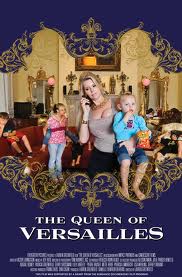
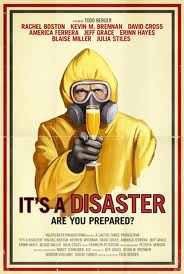 Besides all of the films that underlined the theme of amazing child performances, there were other movies at the 2012 LA Film Festival that made an impression. The fest had a rich roster of documentary films. All of the ones I saw were memorable, in turns entertaining, angering, insightful, and educational. This included Reportero, La Camioneta: The Journey Of One American School Bus, Bestiaire, and The Queen Of Versailles (the latter is playing in a cinema near you right now, and is worth the trip there; we discussed it in a recent Moviewallas podcast). And I didn’t even get to see well regarded docs such as The Iran Job, Searching for Sugarman, Call Me Kuchu and Words of Witness. Lest one might wonder if the festival only featured serious fare, many mainstream Hollywood films were also screened, including Magic Mike, To Rome With Love, People Like Us, and Celeste and Jesse Forever, all of which have since had theatrical distribution (and discussed in Moviewallas podcasts). But the one standout in the festival program of relatively mainstream films was Its A Disaster (directed by Todd Berger and starring Julia Stiles, David Cross and America Ferrera). Likely at the top of the class in the recently minted genre of the End Of The World films, this movie has the distinction of being bitingly funny; it would be criminal if this film did not find distribution and show up for wider consumption soon.
We always say “Too many films, too little time” on our podcasts. Nowhere is this more obvious than when attending a film festival. Next stop, the 2012 Toronto International Film Festival where further delights await.